A rooflight can make a modest kitchen extension feel twice as generous, but only if the specification is right. If you are working out how to specify rooflights, the real challenge is not choosing something that looks good in a brochure. It is making sure the unit suits the roof build-up, the room below, the performance target and the way the space will actually be used.
That matters whether you are a homeowner planning a brighter open-plan living area or a trade buyer who needs a reliable product that installs cleanly and meets the brief first time. A rooflight is a high-visibility element, and mistakes tend to show up quickly – in overheating, poor detailing, awkward kerbs, glare, condensation or disappointing light levels.
Start with the room, not the product
The best rooflight specifications begin from the inside out. Before looking at frame profiles or glazing upgrades, decide what the room needs the rooflight to do.
In some projects, the priority is simple daylight. A dark single-storey extension, internal kitchen zone or garden room may only need a fixed flat rooflight sized to pull more sky into the space. In other cases, ventilation is just as important, especially in kitchens, dining areas and rooms with high occupancy. A manually opening or electrically operated rooflight may be the better choice.
There is also a design question. Do you want a large statement opening over a living space, a pair of smaller rooflights to spread light more evenly, or a long run that follows the shape of the room? Bigger is not always better. Very large glazed areas can look impressive, but they can also create solar gain, require more structural support and increase costs beyond what the room really needs.
How to specify rooflights by roof type
One of the biggest early decisions is whether the roof is flat or pitched. That sounds obvious, but it affects almost every part of the specification, from product type to installation detailing.
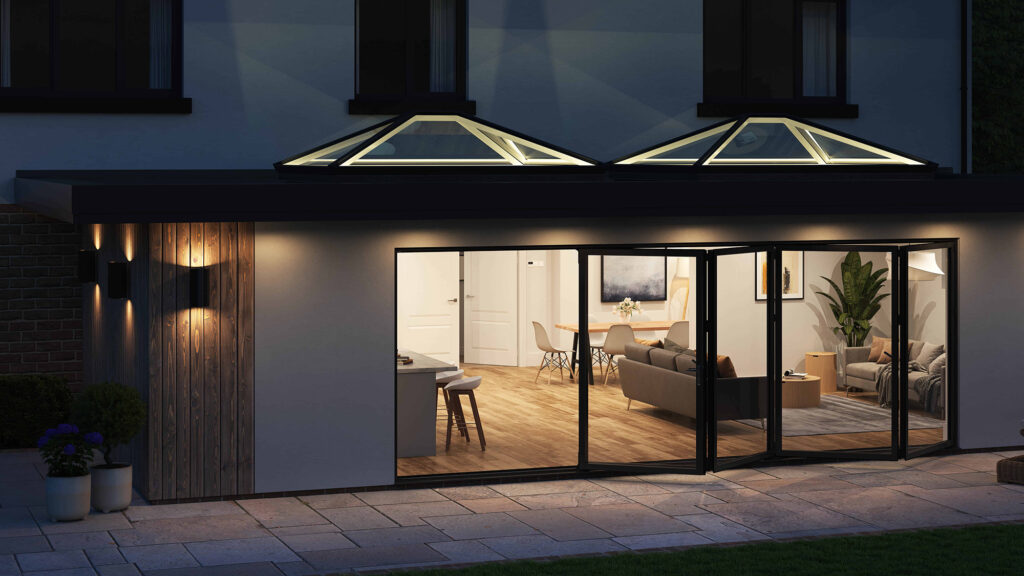
On flat roofs, the usual options are flat glass rooflights, roof lanterns and walk-on units where required. Flat rooflights are often chosen for a more contemporary look with cleaner sightlines, while lanterns can create more architectural presence and add height to the room below. The right answer depends on the design intent, the roof structure and budget.
On pitched roofs, roof windows are generally the appropriate route. These are designed for sloping applications and often offer practical opening functions, making them useful in loft conversions, upper-floor rooms and spaces where purge ventilation is needed.
You also need to check the roof pitch carefully. Some products require a minimum pitch for water runoff, while others are engineered for flat roof upstands. Specifying a product outside its intended pitch range is a common source of problems later.
Size and position make a bigger difference than most people expect
A rooflight does not just bring in light. It changes how light moves through the room, where shadows fall and how balanced the space feels through the day.
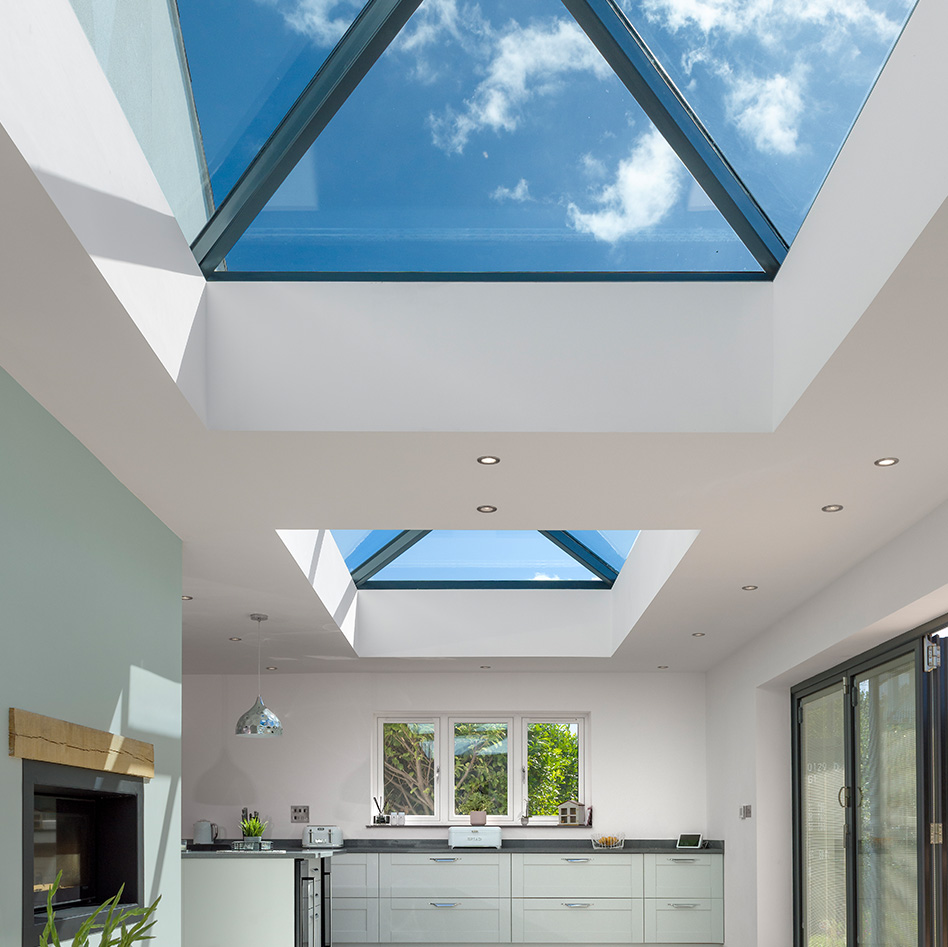
As a general rule, think about the room proportions and where daylight is currently lacking. A rooflight positioned over the centre of a deep extension may brighten the core of the space, but units placed closer to the rear elevation can also help draw light further back towards the original house. In kitchens, placing a rooflight above an island or circulation area often works well, while in dining and living zones it may be more effective to distribute light across multiple openings.
Orientation matters too. South-facing rooflights can deliver excellent brightness, but they may also increase overheating risk in warmer months. North-facing rooflights tend to provide softer, more even light. East and west orientations can create strong morning or afternoon glare depending on the room use.
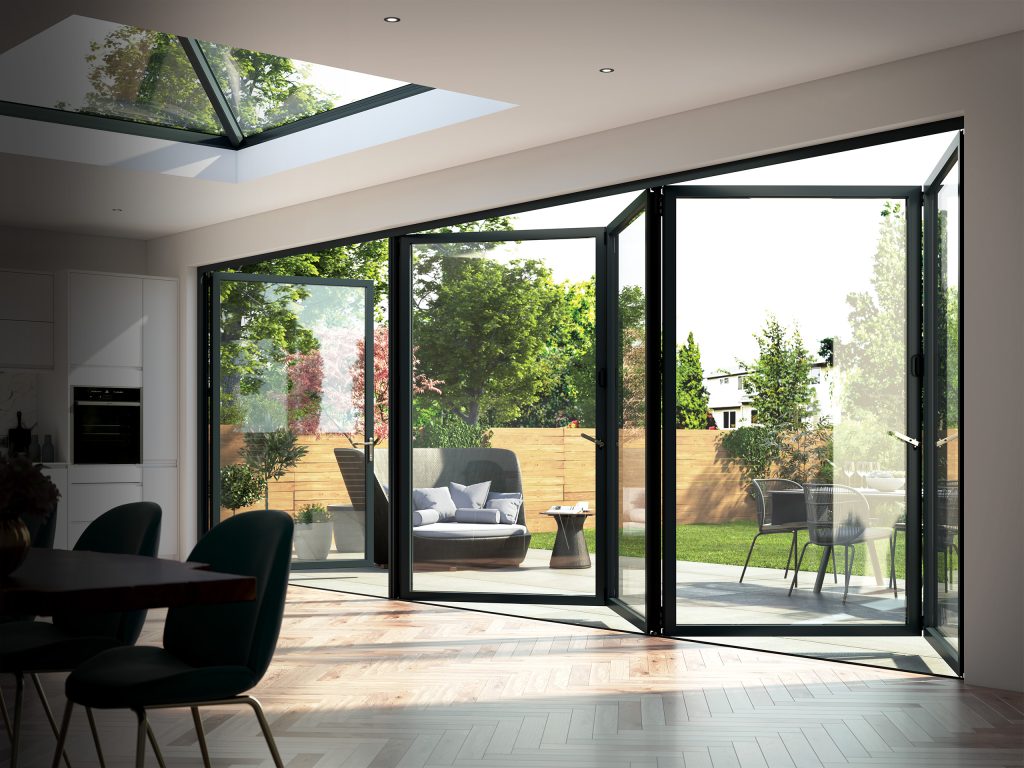
This is where good specification becomes practical rather than purely aesthetic. If a room already has wide sliding or bifold doors, you may not need as much roof glazing as you first imagined. The goal is to maximise light and space, not overglaze the roof.
Glazing specification is about comfort as much as compliance
When people ask how to specify rooflights, glazing is often where the detail starts to matter. The glass unit affects heat loss, solar control, safety, noise reduction and everyday comfort.
For most residential projects, double glazing is standard, but the exact make-up of the sealed unit still needs attention. Consider the U-value if thermal efficiency is a priority, particularly on extensions where building regulations apply. Lower U-values can support better overall performance, but they should be considered alongside frame performance and installation quality rather than in isolation.
Solar control glass can be useful on south-facing or large-format rooflights where overheating could become an issue. This can help limit excessive heat gain without sacrificing natural light. The trade-off is that stronger solar-control coatings may reduce the crisp, clear brightness some homeowners want.
Safety glazing is another key point. Toughened and laminated glass specifications are often required depending on the application, particularly in overhead glazing. Laminated inner panes can also provide reassurance if impact resistance and post-breakage safety are important.
If the property is in a noisy area, acoustic performance may deserve more attention than usual. Roof glazing can admit external sound differently from vertical windows, so homes under flight paths or near busy roads may benefit from enhanced acoustic glass.
Frame, kerb and build-up details need to align
A rooflight is never just a glazed unit on its own. It has to work with the roof build-up, insulation strategy and supporting structure.
On flat roof projects, check whether the rooflight is supplied as a kerb-mounted system, a direct-fix design or a complete unit with upstand included. The kerb height, waterproofing detail and finished roof covering all need to coordinate. A high-performance rooflight specified without the correct upstand or weathering detail can still fail on site.
This is especially relevant on warm roofs, where insulation depth and membrane detailing affect finished levels. Sightlines matter, but so does practical installation. A slim external appearance may look excellent on paper, yet the product still needs to integrate properly with the builder’s kerb, the roofer’s covering and the drainage strategy.
For trade buyers, this is where downloadable technical drawings and section details save time. For homeowners, it is the point where expert guidance is worth having before placing the order.
Opening function, ventilation and controls
Not every rooflight needs to open, but when ventilation is required it should be specified early rather than added as an afterthought.
Fixed rooflights are often the most cost-effective and visually minimal option. They suit spaces where the main goal is daylight and where other windows or doors already provide enough airflow. Opening rooflights are more useful where heat build-up, cooking moisture or limited wall openings make ventilation a concern.
The next choice is how the unit will operate. Manual opening can work well in lower or more accessible positions. Electric rooflights are often the better fit for higher ceilings, kitchen extensions and larger glazed areas. Some projects also benefit from rain sensors, wall switches or remote controls, especially where convenience matters.
Again, there is a balance. More functionality improves usability, but it also increases cost and adds another layer to the electrical coordination.
Building regulations and project requirements
Rooflights sit at the meeting point of design and compliance, so the specification should always reflect the project type.
Thermal performance, safety glazing, ventilation and means of escape may all be relevant depending on whether you are working on a new extension, loft conversion, renovation or replacement project. If the rooflight is going into a habitable loft room, escape requirements may influence the opening size and location. If it is part of a flat roof extension, the energy performance of the overall build-up becomes more important.
Planning is often straightforward for rooflights, but not always. Conservation areas, listed buildings and overlooking concerns can alter what is suitable. It is sensible to check these points before finalising the order, especially on bespoke sizes.
Common mistakes when specifying rooflights
Most specification problems come back to one issue: making a visual decision too early.
A rooflight chosen mainly for appearance may turn out to be too large for the room, too exposed to solar gain or incompatible with the roof structure. Another common mistake is underestimating the importance of the installation detail. The product can be excellent, but if the kerb is wrong, the flashing detail is poor or the opening sizes are not coordinated, the end result suffers.
There is also a tendency to focus only on glass size. Visible frame, internal lining depth and finished plaster reveals all affect how much light reaches the room. Sometimes two smaller rooflights outperform one oversized unit because they spread daylight more evenly and sit better between structural members.
A practical way to get the specification right
If you want a smoother buying process, gather the key facts before comparing products. That means the roof type, roof pitch, structural opening size, preferred external and internal appearance, ventilation needs, glazing performance targets and any planning or building control constraints.
At that point, product choice becomes far more straightforward. You can compare flat rooflights, roof lanterns or roof windows based on what the project actually demands, rather than on generic features alone. This is also where a supplier with both technical support and a broad product range can add real value, because the best option is not always the most expensive or the most heavily specified.
A well-specified rooflight should feel easy once it is installed. It should brighten the home, support comfort through the seasons and look like it belongs to the architecture rather than being added on at the last minute. If you start with the room, respect the build-up and ask the right technical questions early, the final choice tends to become much clearer.