When you are planning an extension, garden room or full rear renovation, the question usually comes up early: bifold doors vs sliding doors. Both can transform how a room feels, bring in more daylight and create a stronger connection to the garden. But they do it in different ways, and the right choice depends on how you want the space to work day to day.
This is not just a style decision. Sightlines, opening width, frame size, threshold detail, thermal performance and budget all play a part. For some homes, bifolds are the obvious answer. For others, sliding doors deliver a cleaner result with fewer compromises.
Bifold doors vs sliding doors: the core difference
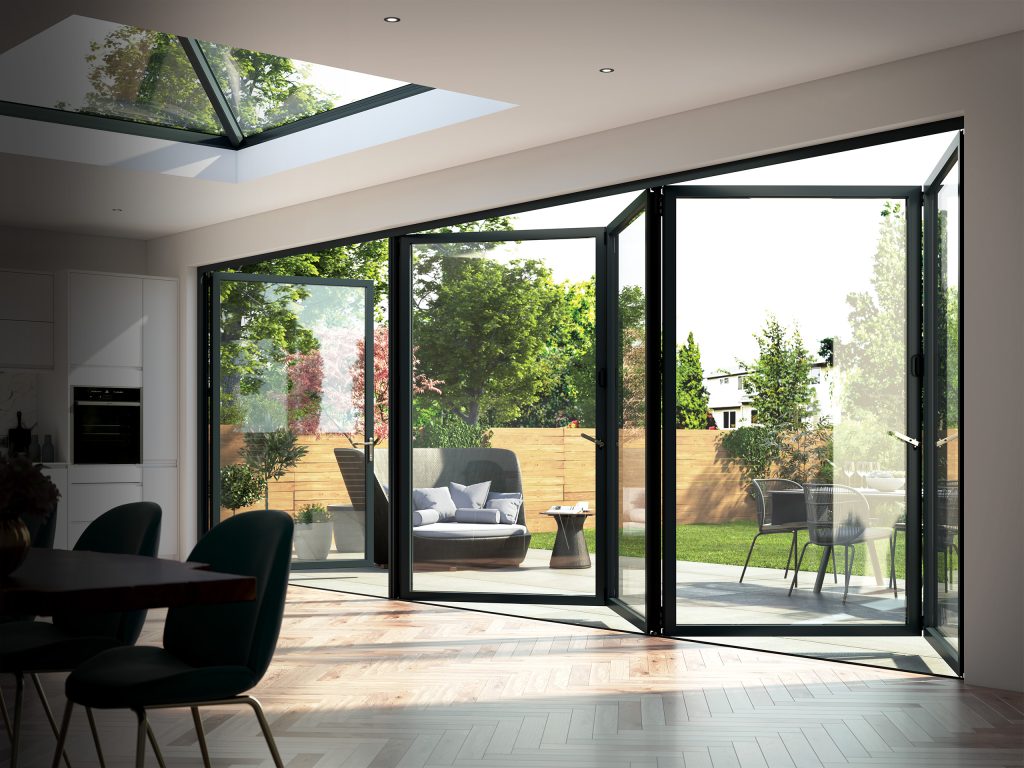
Bifold doors are made of multiple panels that fold and stack to one or both sides when opened. That gives you the option to open up a large proportion of the aperture and create a more open-plan feel between inside and out.
Sliding doors work differently. The panels glide across a track and stack in line with one another, rather than folding away. You never get the full width open because one panel will always sit behind another, but you do get larger panes of glass and slimmer framing in many systems.
That basic difference shapes almost every buying decision that follows. If your priority is creating the biggest possible opening, bifolds tend to lead. If your priority is uninterrupted views and maximum glass, sliding doors often come out ahead.
Which option gives you more light and better views?
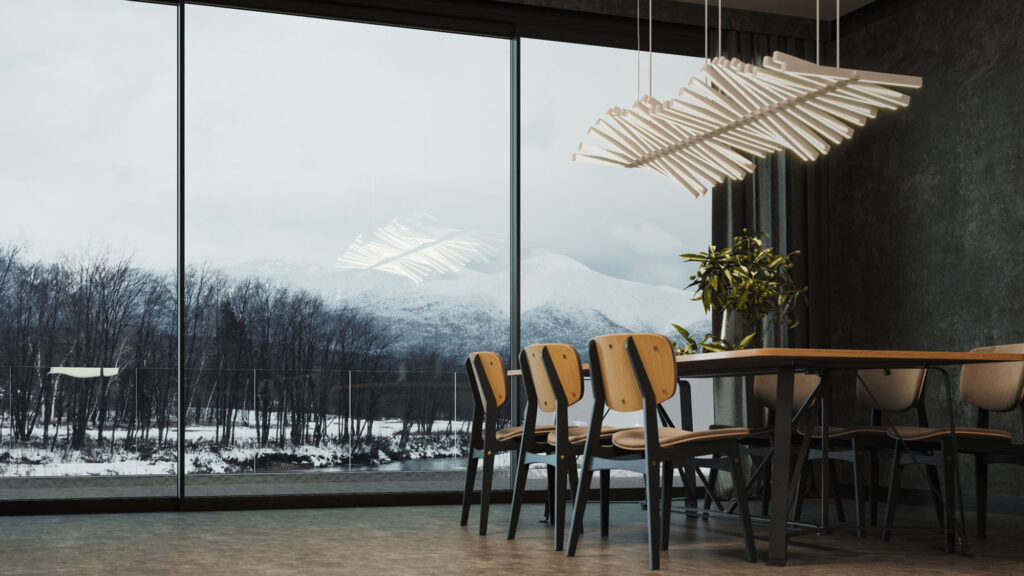
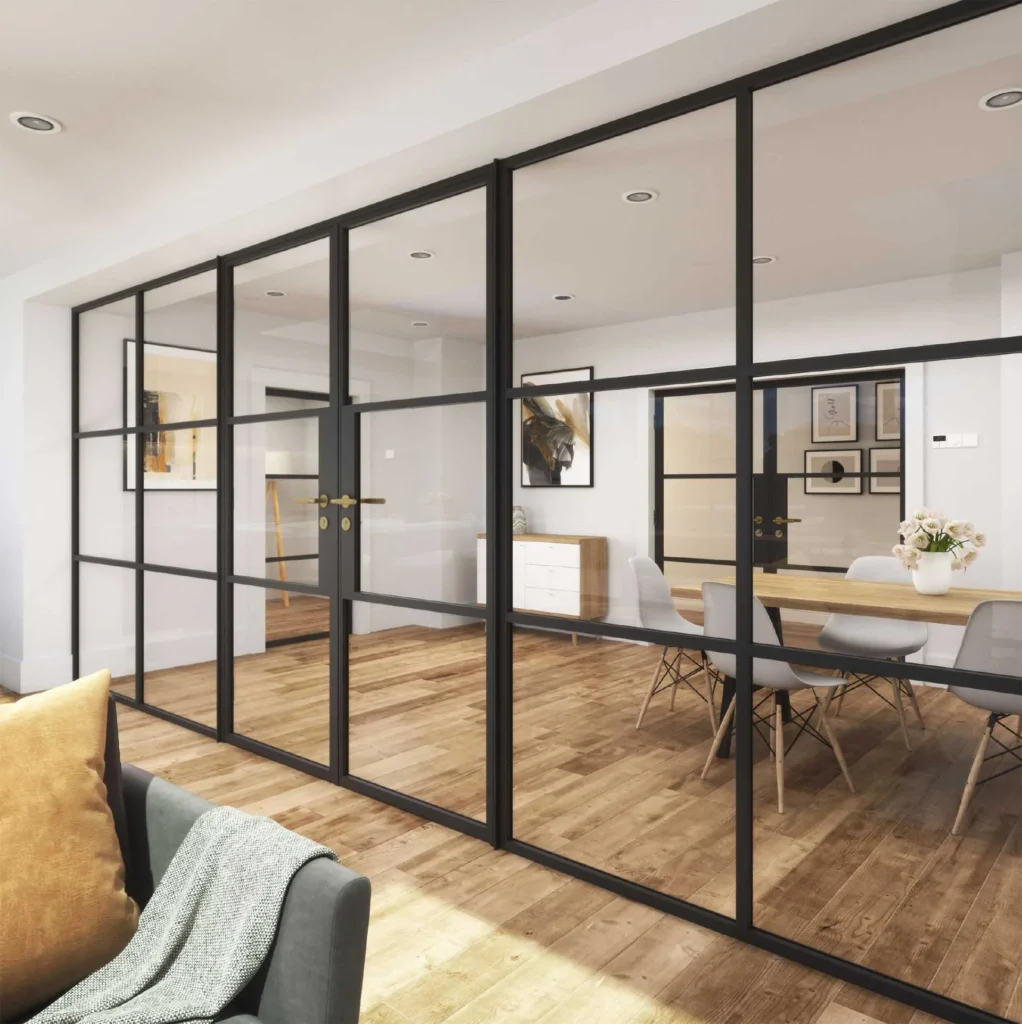
If you are trying to maximise glass, sliding doors usually make the stronger case. Because the panels do not need to hinge together and fold, they can often be made wider, with fewer vertical frame breaks across the opening. The result is a cleaner glazed wall and broader garden views, especially when closed.
Bifolds still bring in plenty of natural light, but the design naturally involves more frame lines. Each panel needs its own framework and hinges, so the overall look is more segmented. Some homeowners like that rhythm, particularly on traditional extensions or where they want the doors to feel more architectural. Others prefer the simpler, more minimal appearance of a sliding system.
For modern homes with wide openings and a strong focus on sightlines, sliding doors are often the more design-led option. They suit projects where the glazing is meant to be a feature in its own right, not just a route to the garden.
Bifold doors vs sliding doors for opening up your home
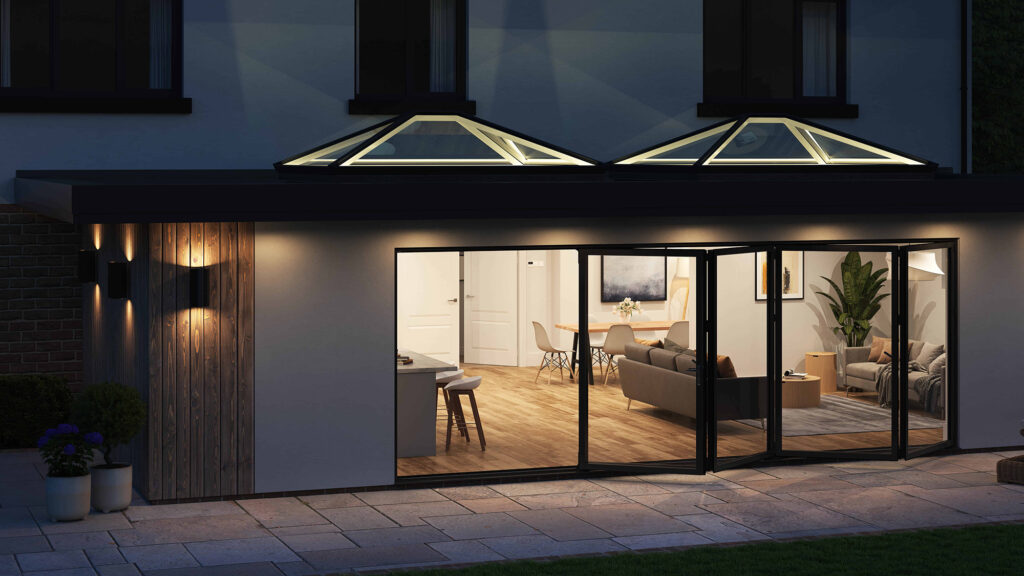
This is where bifolds tend to shine. If your goal is to open up your home as much as possible in warm weather, bifold doors are hard to ignore. With the panels folded back, you can clear most of the opening and make the kitchen, dining area or garden room feel far more connected to the patio.
That makes bifolds particularly popular for family spaces used for entertaining. On a sunny day, they can turn a rear extension into a genuinely indoor-outdoor room.
Sliding doors give you a more controlled opening. You can open one panel for access or part of the opening for ventilation, but a section of the aperture will always remain covered by stacked glass. For many buyers, that is not a problem at all. In fact, if you mainly want easy garden access and a better view, rather than a fully opened wall, sliding doors may be all you need.
How much space do they need?
Space planning matters more than many people expect. Bifold doors need room for the folded panels to stack, either internally or externally depending on the configuration. That stack takes up space at the edge of the opening and can affect nearby furniture, blinds or wall layouts.
Sliding doors are neater in that respect. Because the panels move within their own frame, they do not project into the room or out onto the patio. That can be useful in tighter spaces, smaller extensions or layouts where every bit of usable floor area matters.
If you are designing a compact kitchen extension, a garden room with fixed furniture, or a patio where circulation needs to stay clear, sliding doors may be the more practical fit.
What about thresholds and everyday use?
Both door types can be specified with low thresholds, but the detail matters. Homeowners often want the cleanest transition possible between indoors and outdoors, especially for contemporary builds or family homes where ease of access is important.
Bifolds can work very well here, but because of the way the panels fold and track, threshold design needs careful consideration. You may need to balance weather performance against how flush you want the finish to be.
Sliding doors are often appreciated for their simple operation. There is something very straightforward about gliding a large glass panel open with minimal effort. On wider openings, this can feel more refined and less busy than unlocking and concertina-folding several panels.
That said, bifolds offer flexibility. Many systems include a traffic door, letting you use one panel for everyday access without folding back the whole set. If you are in and out to the garden frequently, that can be a useful feature.
Style, property type and the look you want
There is no fixed rule that says one suits modern homes and the other suits traditional ones, but certain patterns do appear.
Sliding doors often complement contemporary extensions, rendered rear elevations and open-plan layouts where minimal framing is part of the brief. They feel calm, clean and architectural.
Bifolds can work beautifully in both contemporary and more classic settings. Aluminium bifolds are still a strong choice for modern projects, while heritage-inspired designs can sit well on renovated period properties. If you like the idea of a more structured glazed elevation with visible panel divisions, bifolds can add character rather than take it away.
The best choice is usually the one that fits the architecture of the project, not just current trends.
Price and value
Budget matters, especially when doors sit alongside rooflights, windows, lanterns and other major specification costs.
There is no single answer on price because panel sizes, configuration, glazing specification, colour, hardware and brand all affect the final cost. In general terms, bifolds can be a cost-effective way to cover wider openings, while premium sliding systems can become more expensive as glass sizes and system performance increase.
But price should not be judged in isolation. Value comes from choosing the right product for the way the room will actually be used. Spending more on sliding doors may make sense if your priority is premium sightlines and larger panes. Choosing bifolds may be better value if the real goal is opening the full rear elevation for summer living.
For trade buyers and homeowners alike, the strongest buying decision usually comes from matching the door type to the brief first, then comparing systems within that category.
Thermal performance, security and specification
Modern bifold and sliding door systems can both offer strong thermal performance and security when correctly specified. The difference is rarely about one being good and the other being poor. It is more about comparing actual system data, glazing options and installation quality.
U-values, air tightness, weather ratings and security features should all be reviewed on a product-by-product basis. This is especially important on UK projects where exposure, orientation and building regulations all influence the right choice.
For example, a south-facing glazed extension may prioritise solar control as much as insulation. A coastal property may need extra attention on finish durability. A trade installer may want a system with straightforward adjustment and reliable lead times. These are specification decisions, not just aesthetic ones.
That is why technical documents, size limits and threshold details are worth checking before you buy, not after.
So which should you choose?
Choose bifold doors if you want to maximise the opening, create a stronger inside-outside feel and make the garden part of everyday living in warmer months. They are especially effective on family extensions, entertaining spaces and projects where flexibility matters.
Choose sliding doors if your priority is larger glass panels, slimmer sightlines and a more uninterrupted view. They are ideal when you want to brighten your home with a cleaner glazed look and keep the operation simple.
If you are still weighing up bifold doors vs sliding doors, ask yourself one practical question: when the doors are closed for most of the year, what matters more – the view through them, or the size of the opening when they are open? That answer usually points you in the right direction.
At Horizon Windows and Doors, this is exactly the kind of decision where clear product guidance makes a difference. The best door is not the one with the loudest sales pitch. It is the one that suits your opening, your budget and the way you want to live in the space once the build is finished.
A well-chosen glazed door should do more than look good on installation day. It should make the room feel brighter, work effortlessly every day and still feel like the right decision years down the line.