A flat roof extension can look brilliant on plan and still feel disappointing once built if the natural light is wrong. That is usually the point where people realise choosing the best rooflights for flat roofs is not just about looks. It affects brightness, comfort, privacy, heat loss, ventilation and how the whole space feels day to day.
For homeowners, that often means deciding what will make a kitchen extension feel bigger and lighter without creating glare or overheating. For builders and installers, it means balancing specification, lead time, ease of fitting and client expectations. The right answer depends on the room, the roof build-up and what you need the glass to do.
What makes the best rooflights for flat roofs?
The best option is rarely the one with the biggest pane of glass or the lowest price. A rooflight has to work as part of the full roof design, not as a last-minute upgrade. Sightlines matter, but so do thermal performance, glazing quality, kerb detail, weather resistance and how easy the unit is to install correctly.
For most UK projects, the strongest choices are products designed specifically for modern flat roof applications with slim internal views, insulated upstands or kerb compatibility, and high-performance double or triple glazing. You want a rooflight that brings in light without creating a weak point in the building envelope.
There is also a practical point that gets missed. A premium-looking rooflight that is awkward to fit, poorly documented or difficult to size can slow a project down. That matters to trade buyers and homeowners alike.
Fixed flat rooflights are often the smartest choice
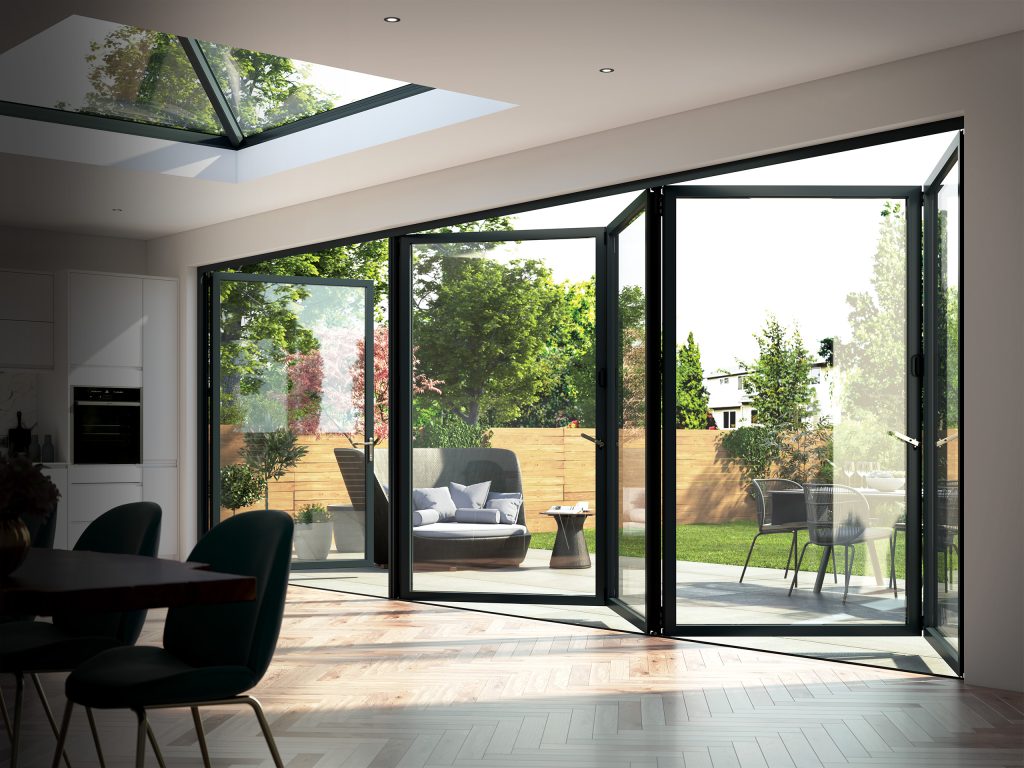
If your priority is daylight, clean lines and value, a fixed flat rooflight is usually the starting point. These are popular for kitchen extensions, dining areas, hallways and open-plan rear additions because they maximise light and space without adding mechanical complexity.
A good fixed unit tends to offer the slimmest appearance and the strongest visual connection to the sky. It is also usually the most cost-effective route if you do not need extra ventilation. For many single-storey extensions, that is enough. You get strong daylight performance, straightforward specification and a crisp, contemporary finish.
That said, fixed rooflights are not always ideal in rooms where excess heat or moisture is a concern. In a kitchen with limited wall windows, or in a flat-roofed bathroom, opening ventilation may be worth paying for.
When fixed rooflights work best
They suit rooms where side glazing already handles airflow, and where the main brief is to brighten the interior. They are also a strong choice when you want a minimalist ceiling view rather than a more pronounced roof feature.
For trade projects, fixed units can help keep installation simple and predictable. Fewer moving parts often means fewer complications on site.
Opening rooflights add ventilation as well as light
An opening flat rooflight is a strong option where airflow matters just as much as daylight. Kitchens, utility rooms, bathrooms and garden rooms can all benefit from roof-level ventilation, especially where warm air tends to gather.
Manual opening units can work well in lower-level applications where access is easy. Electric rooflights make more sense for higher ceilings or larger rooms, particularly when convenience is part of the brief. Rain sensors and remote operation can also be useful in family homes where the rooflight may be left open by mistake.
The trade-off is cost. Opening units are more complex than fixed rooflights, and that usually shows in both product price and installation detail. But if the room needs better ventilation, it is often money well spent.
Electric or manual?
Manual opening tends to suit smaller projects and tighter budgets. Electric models are better for hard-to-reach locations and for buyers who want a more premium finish. In higher-value extensions, electric operation often feels more in keeping with the rest of the specification.
Frameless internal views are popular for modern extensions
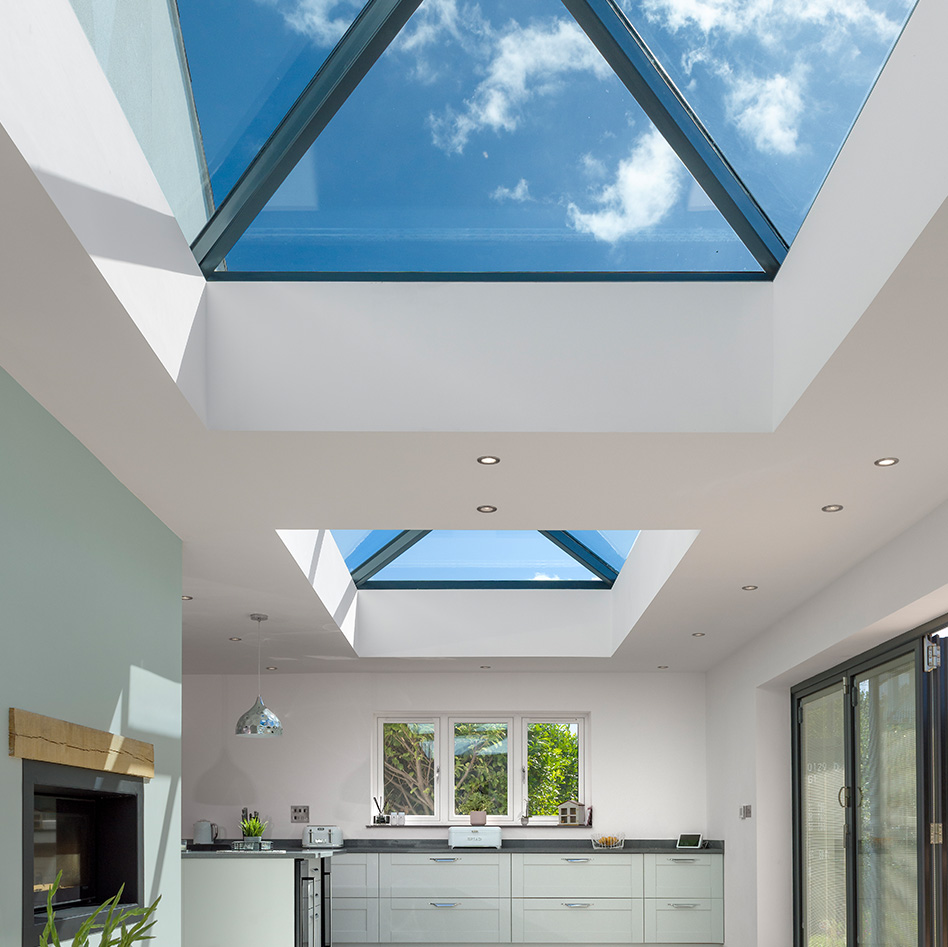
One of the most requested styles is the walk-on-glass look from below, even when the rooflight itself is not designed to be walked on. That clean internal appearance comes from modern flat glass designs with minimal visible framework and a neatly plastered reveal.
This style suits contemporary homes particularly well, but it also works on period properties where the extension is deliberately modern. The contrast can be very effective. If your priority is a bright, refined interior with a less bulky finish than a lantern, a flat rooflight is often the better fit.
Not every project benefits from the biggest pane possible, though. A very large rooflight can create too much solar gain in south-facing rooms, or make the ceiling feel unbalanced. Sometimes two smaller rooflights placed carefully across the space will give better light distribution and a neater result.
Roof lanterns versus flat rooflights
People comparing the best rooflights for flat roofs often end up deciding between a roof lantern and a flat rooflight. Both bring natural light into a flat roof structure, but they create a different look and feel.
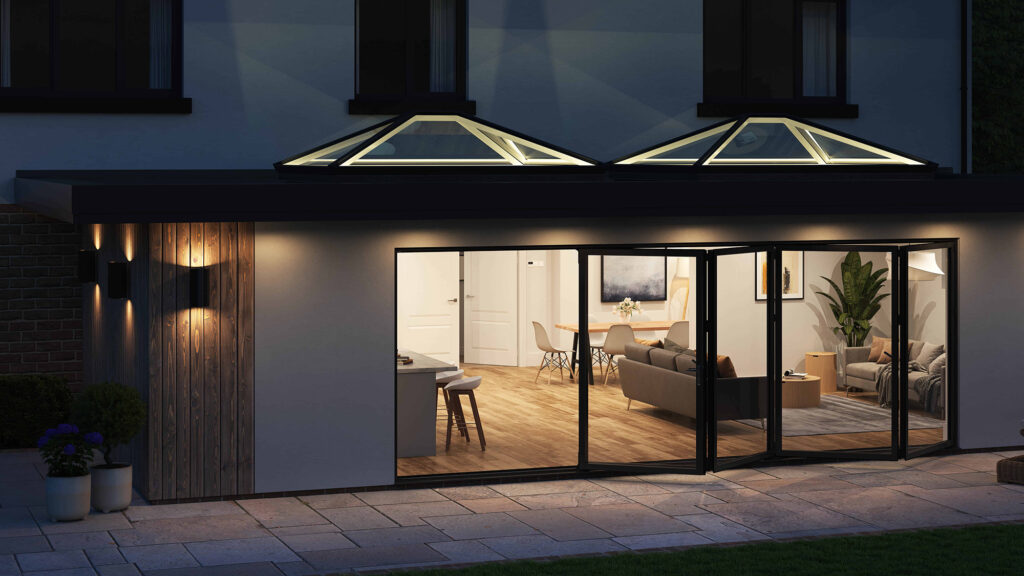
A flat rooflight is lower profile, more minimal and often better suited to modern extensions. It gives a cleaner external roofline and a more understated internal finish. A roof lantern creates more architectural presence and can help draw light deeper into the room because of its raised design and multiple glazed sections.
Neither is automatically better. If you want a sleek ceiling view and a simpler contemporary aesthetic, a flat rooflight is usually the stronger option. If you want a focal point over a kitchen island or dining area, a lantern may suit the brief better.
Glazing performance matters more than many buyers expect
When comparing products, glazing specification deserves close attention. In the UK climate, a flat rooflight needs to do more than let light in. It should also help regulate temperature, reduce heat loss and manage solar gain.
Look at the overall thermal performance, not just the glass description. Low-emissivity coatings, argon-filled units and warm edge spacer technology all contribute to better efficiency. Solar control glass can be especially useful on south-facing or west-facing roofs where summer overheating is a risk.
Privacy may matter too. Clear glazing is the go-to choice for most extensions, but tinted or obscured options can work well in overlooked settings. This is common in urban projects, side returns or rooms near neighbouring upper floors.
Double or triple glazing?
For many residential flat roof applications, high-specification double glazing is enough. Triple glazing can improve thermal performance further, but it adds weight and cost. Whether it is worth it depends on the project goals, roof structure and budget.
For homeowners focused on year-round comfort, double glazing with strong solar and thermal performance is often the sweet spot. For highly specified builds, triple glazing may make more sense.
Size, placement and orientation change the result
A rooflight that is technically excellent can still underperform if it is the wrong size or in the wrong place. Orientation has a major effect on how the room will feel. South-facing rooflights bring strong daylight and can help a room feel bright all year, but they may also increase glare and overheating in summer. North-facing light is softer and more even.
Placement matters just as much. Over a kitchen island, a rooflight can create a striking feature and make task areas brighter. Over the centre of an open-plan extension, it can help connect different zones. In a narrow side return, a run of smaller rooflights may spread light more effectively than one oversized unit.
This is where bespoke sizing can make a real difference. Standard sizes are useful, but many projects benefit from tailoring dimensions to the roof layout rather than compromising around it.
What trade buyers should prioritise
Installers and builders usually need more than a good-looking product. They need clear technical information, dependable lead times, practical kerb details and confidence that the specification will stand up on site.
That means checking opening sizes, external dimensions, minimum roof pitch requirements, upstand recommendations and glazing weights before ordering. It also means choosing products backed by accessible support. A good rooflight should be easy to specify and easy to fit, not a problem handed to the installer.
For trade customers managing multiple projects, product range matters as well. Having access to recognised brands alongside value-led premium options can make specification more flexible across different budgets.
Choosing the best rooflight for your project
If you are planning a kitchen extension, start with how you want the room to feel. Bright and minimal usually points to a fixed flat rooflight. If the room also needs airflow, move towards an opening design. If you want more architectural impact, compare flat rooflights with lanterns rather than assuming one style fits every scheme.
Then look beyond appearance. Check the glazing, the thermal values, the kerb detail, the sizing options and whether the product is designed for the type of build you are creating. A well-chosen rooflight should brighten your home, support energy performance and feel like part of the design from day one.
The best rooflights for flat roofs are the ones that match the space properly. Get that balance right, and a flat roof stops being just a structural necessity and starts becoming one of the strongest features in the room.