A rooflight is rarely a minor detail in an extension. It can set the character of the whole room, control how daylight falls across a kitchen or garden room, and influence the feel of the ceiling from every angle. When comparing Korniche versus Brett Martin, the right answer is not simply which brand is better. It is which product type, sightline and specification best suit your roof, budget and plans for the space below.
Both are established names for UK projects, but they are often considered for different reasons. Korniche is particularly well known for its aluminium roof lantern and contemporary flat glass rooflight designs. Brett Martin has a broad daylighting heritage, with flat glass rooflights and rooflight systems designed for residential and commercial applications. Understanding those distinctions makes specification much more straightforward.
Korniche versus Brett Martin: the key difference
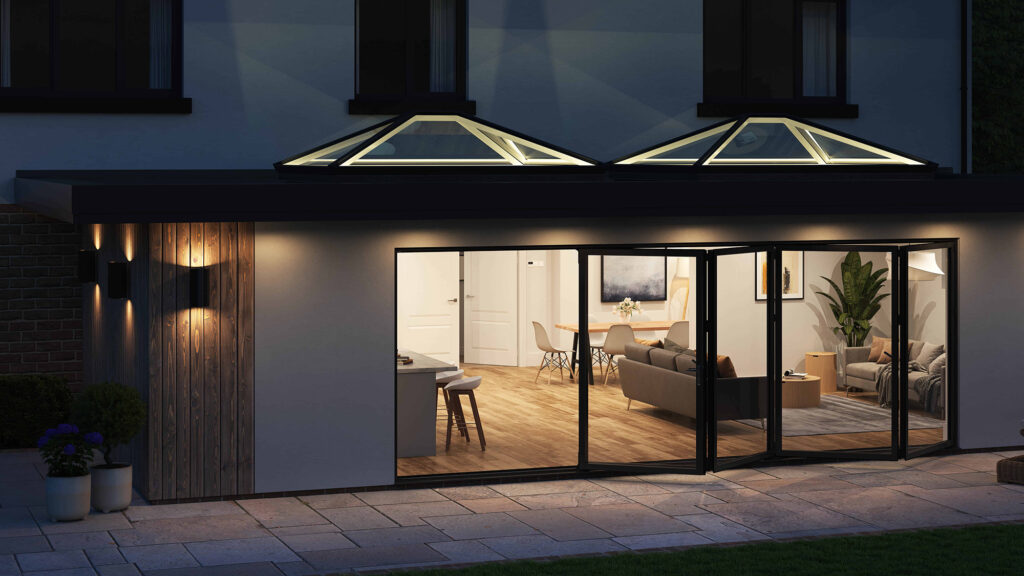
The first decision is whether you want a raised roof lantern or a flat, low-profile rooflight. A Korniche roof lantern is designed to create a strong architectural feature above a flat roof. Its aluminium framework and pitched glazing introduce height, shape and a more traditional lantern effect, making it a popular choice for kitchen extensions, orangeries and larger open-plan rooms.
A flat glass rooflight sits much closer to the roof surface. This creates a cleaner, more contemporary ceiling line from inside and a restrained appearance from outside. Both Korniche and Brett Martin offer options in this category, so this is often where the comparison becomes most direct.
Brett Martin flat glass rooflights are frequently specified where a minimalist look, practical daylight performance and a broad range of rooflight solutions are the priority. Korniche flat glass rooflights appeal to homeowners and installers looking for a premium aluminium-led finish with crisp external detailing. Neither approach is automatically right for every project. A lantern brings more visual presence and can make a large room feel taller, while a flat rooflight can provide abundant daylight without competing with a modern architectural scheme.
Design and visual impact
For projects where the rooflight is intended to be a focal point, a Korniche roof lantern has obvious appeal. The system is engineered around slim, neat aluminium sections, helping to maximise the glazed area while retaining the defined geometry that makes a lantern distinctive. It works especially well over dining areas, islands and central seating zones where the roof opening can be positioned to frame the room.
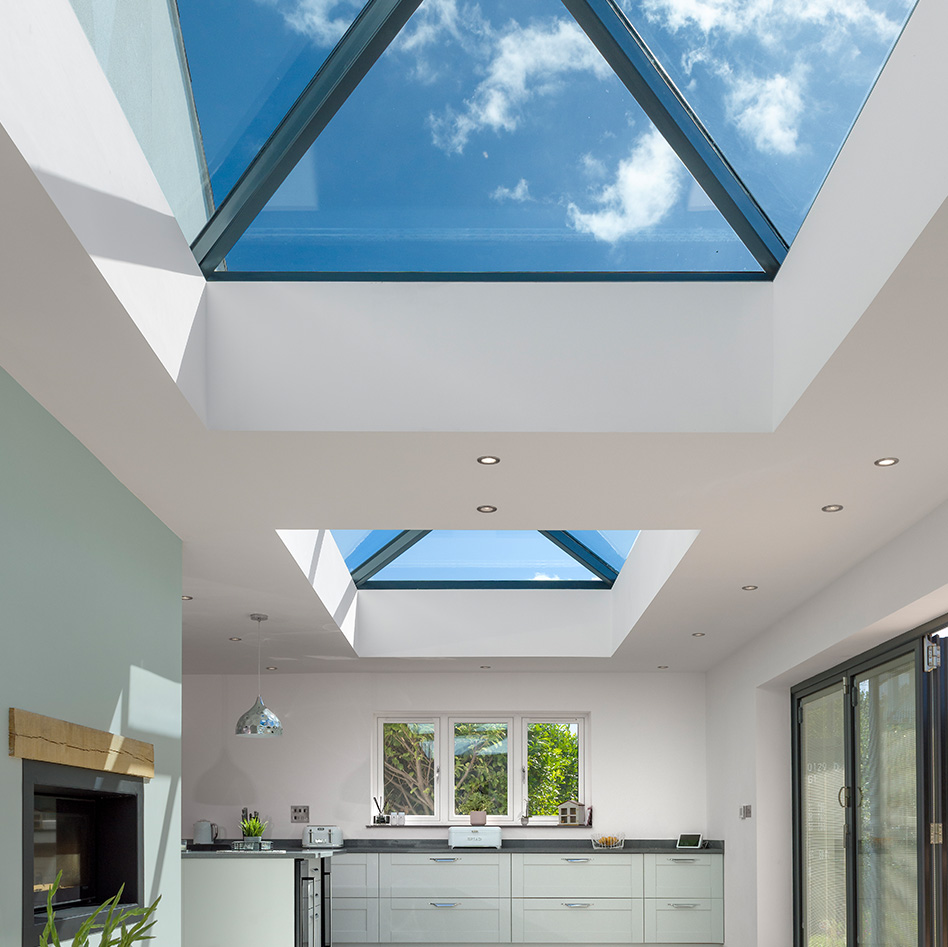
A flat rooflight has a quieter effect. Brett Martin’s glass rooflight options can suit extensions with low parapets, contemporary façades or ceilings where you want light without a raised internal feature. From below, the glazed opening reads as a simple panel of sky. This can make smaller rooms feel brighter without adding visual weight overhead.
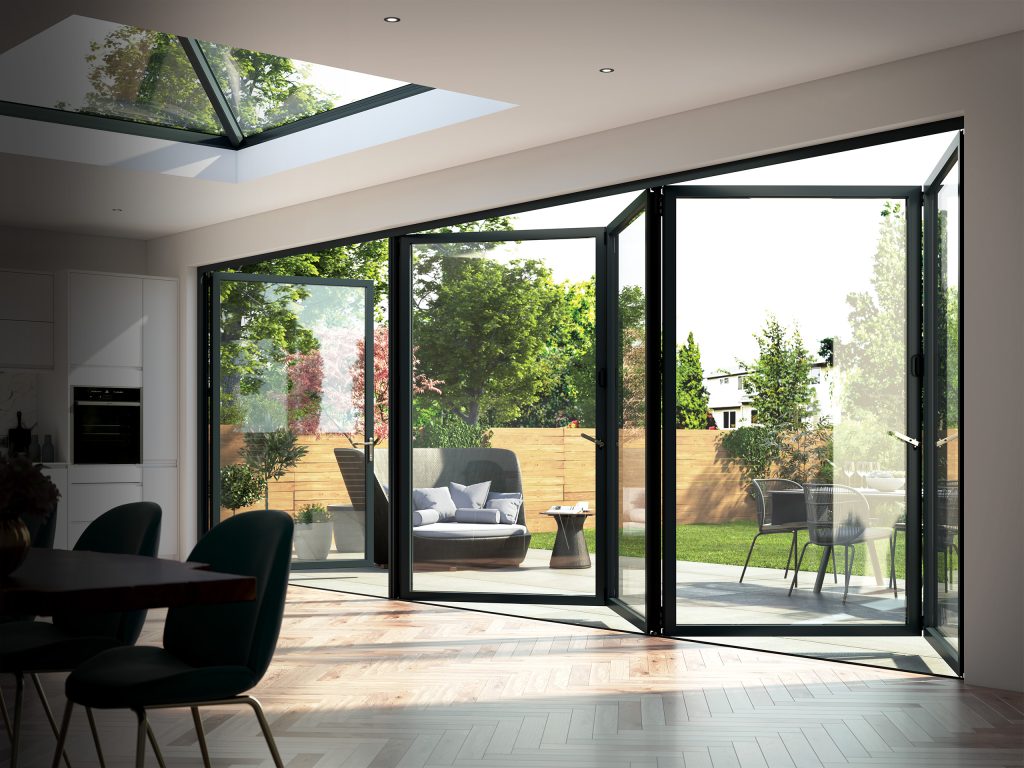
It is also worth considering the house itself. A period-style property or a more decorative extension may benefit from the symmetry of a lantern. For a modern rear extension with sliding doors and clean aluminium lines, a flat rooflight can create a more cohesive result. The external view matters too: a lantern changes the roof profile, whereas a flat rooflight is generally more discreet.
Frame colour and glazing choices
Colour should be selected alongside the doors and windows, not as an afterthought. Black, anthracite grey and grey aluminium finishes remain popular because they complement contemporary glazing and darker roof coverings. A matching or carefully coordinated finish can make a rooflight feel integral to the build rather than added later.
Glazing specification also has a meaningful impact on comfort. The best choice depends on orientation, room use and the amount of existing glazing. South- and west-facing extensions can receive considerable solar gain, particularly when large bifold or sliding doors are included. In that setting, solar-control glass may be worth considering to reduce overheating and glare. A north-facing room may place more emphasis on gaining useful daylight and keeping heat loss low.
Privacy is another practical consideration. Obscure glazing may suit overlooked areas, while clear glass generally delivers the strongest connection with the sky. For bedrooms, bathrooms or neighbouring boundaries, discuss the planning and privacy implications before finalising the roof opening.
Thermal performance: look beyond one headline figure
It is tempting to compare rooflights on a single U-value, but this can be misleading. Thermal performance varies according to the overall product size, glass build-up, frame design, spacer bars and installation detail. A centre-pane figure describes the glass itself, while an overall product U-value gives a more useful indication of the complete rooflight’s performance.
Korniche and Brett Martin products should therefore be compared on a like-for-like basis. Check the declared whole-product value for the exact size and glazing option you plan to buy. If an extension is being assessed against Building Regulations, confirm that the selected product and roof design meet the requirements for the specific project.
The rooflight cannot perform well in isolation. Correct upstand dimensions, insulation around the opening, airtightness and professional weathering all affect the finished result. A premium glazed unit fitted to a poorly prepared kerb will not deliver the comfort, weather resistance or appearance expected.
For homeowners, this translates into a simple question: will the room be pleasant to use through the year? Good thermal performance helps, but so do ventilation, shading, the amount of vertical glazing and the layout of the extension. In a highly glazed kitchen, one very large rooflight may not always be the most comfortable solution. Two smaller units, positioned to spread daylight more evenly, can sometimes work better.
Installation and project planning
Rooflights need early coordination. The structural opening, roof joists, roof covering, upstand and internal ceiling finish should all be considered before the roof is built. This is particularly relevant for roof lanterns, where the opening size and positioning have a major influence on the finished proportions.
Korniche roof lanterns are often chosen by installers for their purpose-designed system and efficient assembly process. For trade customers managing programme pressure, a well-planned installation system can save valuable time on site. However, efficient fitting still depends on accurate preparation, careful handling of glazing and following the manufacturer’s instructions.
Brett Martin rooflights are also widely recognised within professional roofing and building projects. Their suitability will depend on the chosen range, roof type and required finish. Flat glass rooflights are generally a more straightforward visual solution for single-storey extensions, but the flashing and waterproofing work remains critical. Always ensure the roofer and installer agree on responsibility for the upstand, membrane and final weathering before work starts.
Sizing the rooflight properly
Bigger is not always better. A larger glazed area can transform a dim extension, but it may increase solar gain and make furniture placement more difficult beneath the opening. Think about where the light is needed at different times of day. A rooflight above a kitchen island provides bright task lighting, while one set slightly back from the doors can pull daylight deeper into the room.
For a lantern, proportion is particularly important. A compact lantern can look lost over a very large room, while an oversized design can dominate a modest extension. Measure the usable ceiling area, account for roof structure and view the rooflight in relation to the main doors, kitchen layout and ceiling lights.
Which rooflight is right for your project?
Choose a Korniche roof lantern when you want to make a design statement, add a sense of height and bring a classic glazed-roof feature into an extension. It is a strong option for larger kitchen-diners, garden rooms and spaces where the rooflight should be part of the room’s architecture.
Choose a Korniche flat glass rooflight when you prefer a sharp, premium aluminium appearance but want the restrained profile of a flat unit. It can pair particularly well with aluminium sliding doors, bifolds and modern window systems.
Consider Brett Martin when your project calls for an established daylighting solution with flat glass rooflight options and a practical specification-led approach. It can be an excellent fit for contemporary extensions, refurbishment work and projects where a low-profile rooflight is the central requirement.
Price matters, but the most useful comparison is the installed specification rather than the unit cost alone. Include the glazing option, delivery, upstand, roof works, labour and any structural alterations in the budget. A lower initial product price can be less attractive if it creates extra work or compromises the intended finish.
At Horizon Windows and Doors, the most effective starting point is to decide how you want the room to feel: dramatic and open beneath a lantern, or calm and contemporary beneath a flush glazed opening. From there, the roof size, orientation, glass choice and installation details will point you towards the rooflight that earns its place in the project.