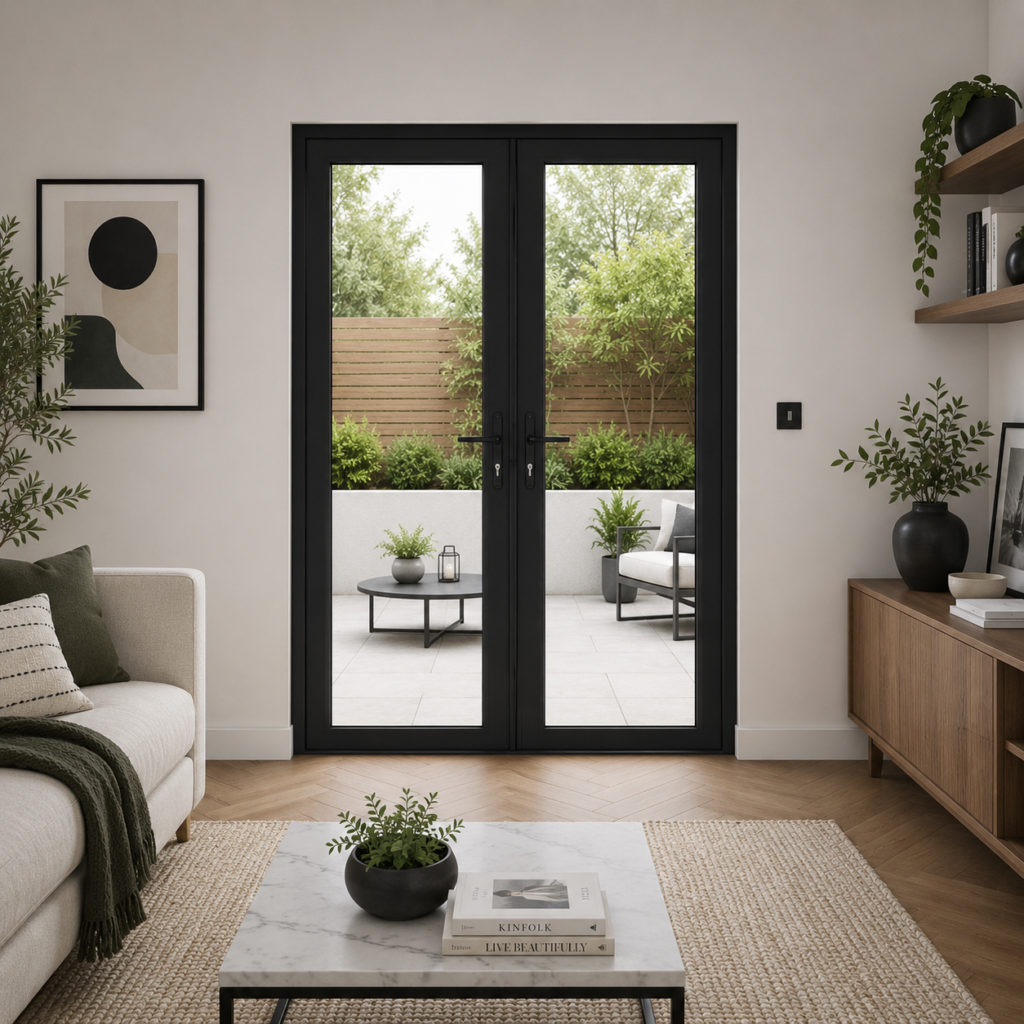
A plain plastered opening can leave a room feeling unfinished. Internal steel look doors change that quickly – they frame space, bring in borrowed light and add the crisp, architectural lines many homeowners want from a renovation.
They have become a go-to choice for extensions, kitchen refurbishments, loft conversions and garden room connections because they do more than look smart. Used well, they help you divide open-plan layouts without making them feel smaller. For homeowners, that means a home that feels brighter and more considered. For builders and installers, it means a product style that answers both practical and design briefs.
Why internal steel look doors are in demand
The appeal is easy to understand. Traditional steel-framed glazing has long been associated with period industrial buildings, converted warehouses and high-end architectural homes. Internal steel look doors borrow that visual language – slim glazing bars, strong sightlines and a refined frame – but in a format that is more accessible for modern residential projects.
That matters because most people are not simply buying a door. They are trying to solve a layout problem. They want to separate a kitchen from a lounge without losing light, close off a home office without making it feel boxed in, or add privacy to a snug while keeping a sense of openness. Internal steel look doors work because they create definition rather than heaviness.
They also suit a wide range of interiors. In a Victorian terrace, they can sit comfortably alongside original features. In a new-build extension, they add contrast and structure. In a minimalist scheme, they bring just enough detail without becoming fussy. The style is recognisable, but it is not locked to one type of property.
Where internal steel look doors work best
The most successful installations usually start with a clear purpose. Between a hallway and kitchen diner, they help stop cooking smells and noise travelling too far while still allowing light through the centre of the house. Between a living room and playroom, they create a practical break that still feels connected. In home offices, they offer visual separation that suits hybrid working far better than a solid blank door.
Double doors are often chosen where homeowners want a more open feel day to day. They can make a kitchen extension feel linked to the original part of the house while still allowing rooms to be closed off when needed. Single doors tend to work well in narrower openings or where wall space is limited.
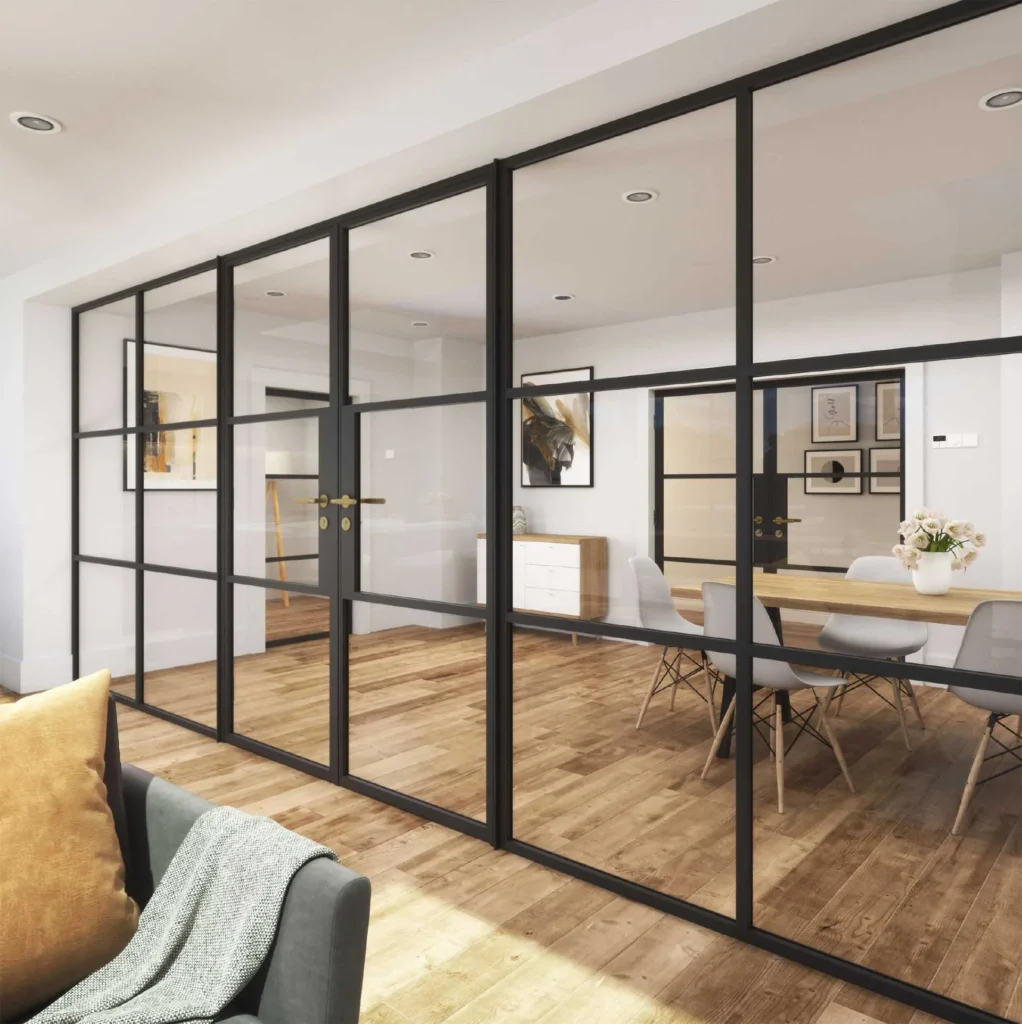
Glazed screens with a matching door can take the concept further. This is especially effective in larger renovations, where maintaining flow is just as important as dividing space. Instead of building a full opaque partition, a glazed internal system keeps rooms feeling generous.
The look is only part of the decision
It is easy to focus on the visual side, but specification matters just as much. The best result comes from balancing style, durability and how the door will actually be used.
Frame material is one of the first considerations. Many steel look internal doors are designed to mimic the appearance of genuine steel while using materials that are more practical or cost-effective for residential settings. That can be a real advantage. You still get the slimline aesthetic, but often with easier handling, simpler installation and a more accessible price point.
Glazing is another key point. Clear glass is the obvious choice if your priority is maximum light, but it is not always the right one. Reeded, frosted or tinted options can make more sense in offices, utility rooms or spaces where privacy matters. The trade-off is simple – the more privacy you add, the less open the space may feel.
Then there is the issue of proportions. Slim bars and large panes generally give a cleaner, more contemporary result. More divided panes can feel more traditional or decorative. Neither is wrong, but they do create different effects. On a small opening, overly busy glazing bars can make the door feel heavier than intended.
What to think about before you buy
The first question is not style but size. Internal steel look doors need careful measuring, especially in older properties where openings are rarely perfectly square. A visually precise product will only look right if the opening has been properly checked and prepared.
You should also think about swing and clearance. In compact rooms, a hinged door can clash with furniture layouts or circulation routes. In those situations, alternative opening styles may be worth considering if the design allows. Where a standard hinged door is the best fit, getting the handing and opening direction right from the outset saves hassle later.
Weight and day-to-day use matter too. A door may look slim and elegant, but it still needs to feel solid, open smoothly and stand up to regular use. For family homes, durability is not a luxury. For trade buyers, it is part of protecting the finished job and avoiding call-backs.
Installation quality is just as important as product quality. Poor alignment, uneven gaps or weak ironmongery can spoil the whole effect. The cleaner the design, the more obvious those mistakes become. That is why technical information, accurate manufacturing and good support through the specification stage are so valuable.
Internal steel look doors in modern renovations
This style has grown alongside one of the biggest shifts in home improvement – the move away from fully closed rooms towards more flexible layouts. People still want open-plan living, but many have discovered its limits. Noise carries, heating zones become harder to manage and there are times when you simply want one room to feel like one room.
Internal steel look doors answer that problem neatly. They let homeowners retain a sense of openness while bringing back control. You can close off the kitchen when entertaining, separate work from family life or create quieter corners without cutting off light.
That flexibility is especially relevant in UK homes, where footprints are often tighter and natural light can be uneven. Borrowing light from adjoining rooms can make a visible difference, particularly in hallways, side return layouts and older houses with darker internal spaces.
For developers and design-conscious renovators, there is also the value aspect. These doors tend to add a more premium feel to the finished interior. They photograph well, they support current buyer tastes and they can help a renovation feel more resolved. That does not mean they suit every property, but when chosen well, they are one of the few interior upgrades that combine function and strong visual impact.
Getting the finish right
Black frames remain the dominant choice, and for good reason. They provide contrast, define glazing patterns clearly and suit both light and dark interiors. But black is not the only route. In softer schemes, darker bronze-inspired tones or muted neutrals can create a less stark finish while keeping the same architectural character.
Ironmongery should be treated as part of the design, not an afterthought. Handles, hinges and latches need to work visually with the frame and practically with the way the door will be used. A beautifully specified door with cheap-looking hardware rarely feels convincing.
Surrounding materials matter as well. Internal steel look doors are at their best when the rest of the space supports them. That could mean timber flooring that adds warmth, a simple plaster finish that lets the frame lines stand out, or glazing elsewhere in the property that echoes the same contemporary feel. They do not need a full industrial scheme around them, but they do benefit from a cohesive setting.
A smart choice for homeowners and trade buyers
For homeowners, the attraction is straightforward – more light, better zoning and a design feature that makes everyday spaces feel sharper and more valuable. For trade professionals, these doors offer a strong answer to a common client request: how to break up space without losing the benefits of open-plan living.
The key is buying with the full project in mind. Budget matters, of course, but so do dimensions, glazing choice, frame quality and the support available before ordering. On larger renovation jobs, having access to technical guidance and clear specification options can make the process far smoother. That is one reason suppliers such as Horizon Windows and Doors focus on combining product choice with practical pre-purchase support.
If you are considering internal steel look doors, think beyond the trend. The best installations are not there just to make a room look better. They make a home work better too – brighter where it needs light, quieter where it needs separation, and far more considered from one room to the next.