
A good garden room bifold door example starts with one simple question: what do you want the space to do when the doors are closed, and what do you want it to feel like when they are open? That answer shapes everything from the opening width to the frame material, sightlines and threshold detail. Get it right, and a garden room feels bright, usable and properly connected to the outside. Get it wrong, and even an expensive build can feel awkward.
For most homeowners, the appeal is obvious. You want to open up your home, bring in more daylight and make the garden room feel bigger than its footprint suggests. For trade buyers and installers, the challenge is a little more practical. The doors need to work with the structure, perform well through winter and be straightforward to specify without storing up problems on site.
A practical garden room bifold door example
Imagine a rectangular garden room at the rear of a property, around 4m wide by 3m deep. It is being used as a home office during the week and an entertaining space at weekends. The full front elevation faces the garden, and this is where the bifold sits.
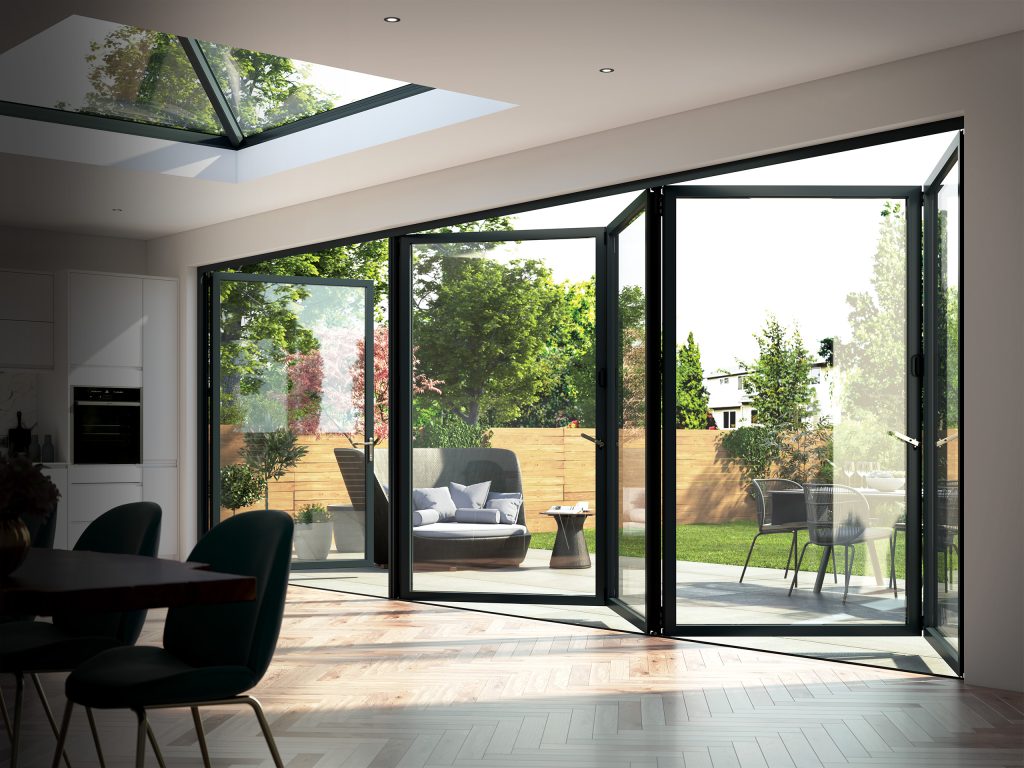
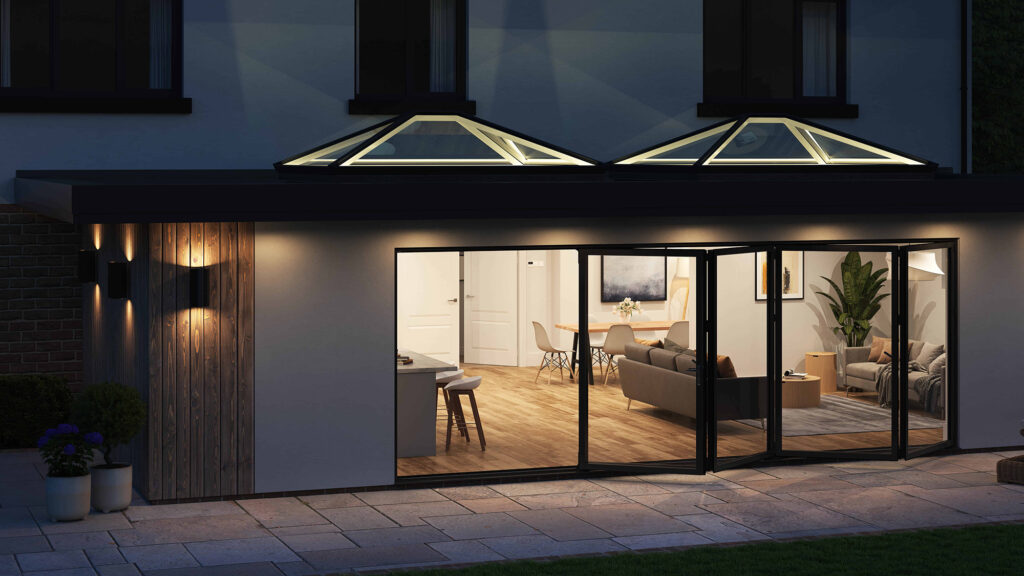
In this example, a three-panel aluminium bifold door across a 3m opening is often the sweet spot. It gives a wide, usable opening without overcomplicating the design, and it keeps panel sizes manageable for everyday operation. When closed, the glazed elevation still feels generous. When open, the room spills naturally onto a patio or deck.
Why three panels rather than four? It depends on the width and how often the room will be used. Four panels can look more symmetrical in some settings, but smaller individual panes can interrupt the view slightly more. Three panels often strike a better balance between opening width, glass area and frame lines, especially in a modest garden room where every visual gain matters.
The opening configuration matters too. If furniture sits against one side wall, the traffic door should ideally be positioned to suit the route people actually take. There is little value in choosing a layout that looks neat on a drawing but forces everyone to walk around a desk, sofa or dining table every time they step outside.
Why bifold doors suit garden rooms so well
Garden rooms sit in an awkward middle ground between extension and outbuilding. They need to feel open and relaxed in summer, but they also need to perform like a proper enclosed room when the weather turns. That is why bifolds remain such a strong choice.
They maximise light and space without making the whole design feel overly commercial. Compared with French doors, they create a much wider opening. Compared with large lift and slide systems, they can be a more practical fit for smaller garden room widths and tighter budgets. They also give more flexibility where people want the option of a daily access leaf rather than moving an entire sliding panel every time.
That said, bifolds are not automatically the right answer. If the opening is very wide and the priority is uninterrupted view when closed, sliding doors may deserve a closer look. If the garden room is compact and furniture sits close to the glazing line, the stack-back of folded panels needs careful thought. A strong specification starts by weighing those trade-offs rather than assuming one product suits every project.
Choosing the right size and configuration
Most garden room projects benefit from keeping the door design proportionate to the building. On a smaller structure, oversizing the bifold can make the front elevation feel dominated by frame and track detail. On a larger garden room, going too small can leave the room feeling more enclosed than intended.
A good rule of thumb is to let the door take up most, but not always all, of the main garden-facing wall. You still need enough structure for stability, insulation and a visually balanced façade. In practical terms, that often means leaving suitable margins at the sides and above, rather than pushing glass into every possible millimetre.
Panel width deserves more attention than many buyers expect. Very narrow panels can look busy. Very wide panels can become heavy and less convenient in daily use. The best result usually comes from proportionate panel sizes that suit the opening, the frame system and the way the space will be used.
For a family garden room, a traffic door is often worthwhile. It gives quick, everyday access without folding the entire set. For a garden gym or occasional-use room, a full opening may matter more than convenience, so the configuration might be chosen differently.
Aluminium is usually the best fit
For most premium garden room projects, aluminium bifold doors make the most sense. They offer slim sightlines, strong thermal performance when correctly specified and a clean, contemporary finish that suits modern garden room design. They also cope well with wider openings and repeated use.
uPVC can work in some settings, especially where budget is the driving factor, but it rarely delivers the same visual sharpness. In a garden room, where the glazing is often the main design feature, that difference is easy to notice.
Colour choice can change the feel of the room more than many people expect. Anthracite grey remains popular because it is adaptable and gives a crisp contrast against light internal finishes. Black can look striking, though it can feel heavier on smaller buildings. Softer shades or dual-colour options can help if you want a darker external look without making the interior feel harsh.
Thresholds, flooring and year-round use
One of the best details in any garden room bifold door example is the threshold. It is not the glamorous part of the specification, but it has a huge effect on how the room feels to use.
A low threshold improves accessibility and helps create a smoother transition onto a patio. It also strengthens that indoor-outdoor feel buyers want from a garden room. The trade-off is weather performance. If the room is fully exposed or sits in an area prone to wind-driven rain, threshold choice needs extra care.
Floor finish matters here as well. If internal floor level and external paving are badly planned, even a premium bifold can feel clumsy in use. Good design is not just about the door itself. It is about how the door sits within the wider build-up of structure, insulation, subfloor and finished surfaces.
If the room will be used through winter as an office or studio, thermal details become even more important. Quality glazing, well-made frames and proper installation all matter. So does the surrounding construction. There is little point choosing high-performing doors if the walls, roof and floor of the garden room are poorly insulated.
Glass specification makes a real difference
When buyers focus only on frame colour and opening style, they can miss the part that affects comfort every day – the glass. In a south-facing garden room, solar gain can be welcome in colder months but excessive in summer. In a shaded north-facing position, maximising light may be the top priority.
That is why glazing specification should respond to orientation, not just appearance. Toughened safety glass is standard where needed, but beyond that there may be decisions around solar control, privacy or acoustic performance. If the garden room faces neighbouring properties, slightly more considered glazing can make the space more comfortable without sacrificing the overall look.
This is one area where straightforward advice is worth a great deal. Homeowners do not need a lecture in glass engineering, but they do need to know how the room is likely to behave in real conditions across the year.
Design details that lift the finished result
The best garden room schemes tend to get the basics right first, then sharpen the result with cleaner detailing. Frame sightlines aligned with windows elsewhere in the build can make the whole structure look better resolved. Matching the bifold colour to roofline trims or external cladding usually creates a more premium finish than treating the door as a standalone product.
Handle style, cill choice and internal reveals all play a part. None of these details are dramatic on their own, but together they shape whether the space feels carefully designed or simply assembled from parts.
For trade professionals, this is often where value is added. Clients may start by asking for bifolds, but what they really want is a finished garden room that feels bright, polished and easy to live with. Product choice matters, but so does guidance on the full specification.
What buyers should avoid
The most common mistake is choosing on opening width alone. A bigger aperture sounds appealing, but if the panel arrangement is wrong or the stack interferes with furniture, the room becomes less practical.
Another mistake is underestimating installation quality. Even an excellent bifold door can disappoint if the opening is poorly prepared or the set is not fitted and adjusted correctly. Sightlines, weathering and smooth operation depend on more than the brochure specification.
It is also worth resisting the cheapest possible route if the garden room is a long-term part of the property. Better frame systems, clearer technical support and a more tailored specification usually pay back in appearance, performance and day-to-day satisfaction. That is one reason many homeowners and trade buyers look for suppliers that combine product choice with proper guidance, as Horizon Windows and Doors does.
A garden room should feel easy to use on an ordinary Tuesday morning, not just impressive on the day it is finished. If your bifold choice supports that – with the right size, layout, threshold and glazing – the whole room works harder for every season.